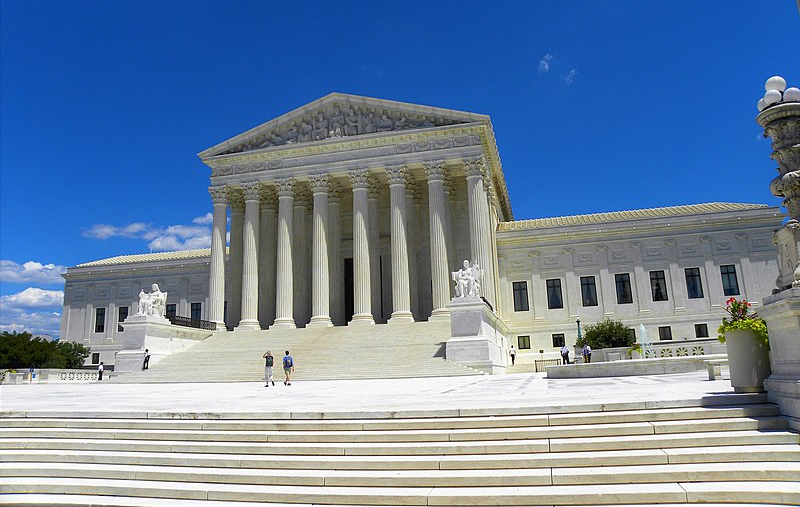
The Supreme Court on Friday temporarily blocked President Trump from carrying out deportations under the 1798 Alien Enemies Act for a group of immigrants detained in northern Texas.
The justices returned the case to an appeals court to consider broader legal questions, including whether the president’s actions are “lawful” and what kind of notice the targeted migrants must receive if the removals are allowed to proceed.
Justices Clarence Thomas and Samuel Alito dissented from the decision. The majority opinion, unsigned, was sharply critical of both the government’s handling of the deportations and how U.S. District Judge James Hendrix addressed the case earlier in the process.
The court cited the example of Kilmar Abrego Garcia, a Maryland resident who was deported to El Salvador. The Trump administration has since told the court it is unable to bring him back from a Salvadoran prison, a development the justices said underscored the seriousness of the case. “The detainees’ interests at stake are accordingly particularly weighty,” the court wrote.
The justices also criticized the administration for giving detainees only 24 hours’ notice before removal—notice that lacked details on how they could exercise their due process rights. The court said this approach “does not pass muster.”
In a rare rebuke of a lower court judge appointed by Trump, the opinion also took aim at Judge Hendrix, who had declined to block the deportations and accused the ACLU of trying to rush the process.