
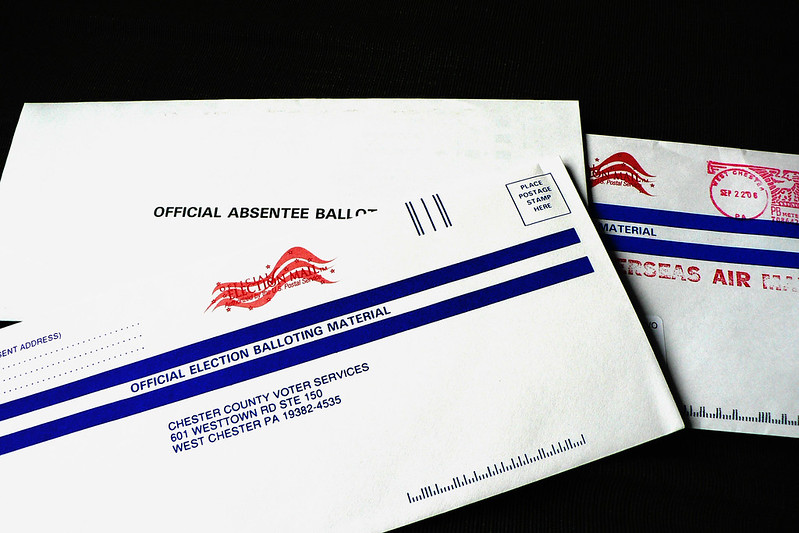
State and county election officials violated the Pennsylvania Constitution by refusing to count mail-in ballots with missing or incorrect dates, according to a Commonwealth Court panel's decision on Friday. In a 4-1 ruling in favor of eight voting rights groups, the panel determined that the handwritten date requirement on the outer envelope of mail-in ballots serves no significant governmental purpose.
The court's majority argued that the guidance by Secretary of the Commonwealth Al Schmidt, which instructed county election boards not to count ballots without a date, violated voters' rights. This followed previous court rulings that had upheld the requirement. Judge Ellen Ceisler, writing for the majority, stated, “The refusal to count undated or incorrectly dated but timely received mail ballots submitted by otherwise eligible voters because of meaningless and inconsequential paperwork errors violates the fundamental right to vote recognized in and guaranteed by the free and equal elections clause of the Pennsylvania Constitution.”
This ruling, which may be appealed to the Pennsylvania Supreme Court, marks the first time a court has addressed the dating requirement under the state constitution’s free and equal protections clause.
Pennsylvania’s vote-by-mail law, implemented in 2020, has faced numerous legal challenges since its inception. The U.S. 3rd Circuit Court of Appeals recently ruled that the dating requirement does not violate the federal Civil Rights Act, but the Commonwealth Court's decision focuses on the state constitution.
John Gore, representing state and national Republican parties, defended the date requirement, citing its importance in ensuring the integrity of the election process. Judge Patricia McCullough, in her dissent, argued that the requirement is among the least burdensome voting procedures and criticized the majority's decision to apply strict scrutiny to it.
In her dissent, McCullough criticized the majority for using the strictest form of constitutional scrutiny on what she referred to as “arguably the least burdensome of all ballot-casting requirements.”
“Today the Majority says that requiring the date on the voter declaration on a mail-in or absentee ballot envelope is subject to strict judicial scrutiny and cannot be enforced because doing so unconstitutionally denies the voting franchise altogether. I must wonder whether walking into a polling place, signing your name, licking an envelope, or going to the mailbox can now withstand the Majority’s newly minted standard,” McCullough stated in the filing.