
OpenAI announced Thursday that the U.S. National Laboratories will use its latest artificial intelligence models for scientific research and nuclear weapons security.
Under the agreement, up to 15,000 scientists at the National Laboratories may gain access to OpenAI’s reasoning-focused o1 series. OpenAI will also collaborate with Microsoft, its lead investor, to deploy one of its models on Venado, the supercomputer at Los Alamos National Laboratory. Venado is powered by technology from Nvidia and Hewlett-Packard Enterprise.
OpenAI CEO Sam Altman unveiled the partnership during the company’s “Building to Win: AI Economics” event in Washington, D.C. According to OpenAI, the collaboration will support cybersecurity efforts to protect the U.S. power grid, advance disease treatment and prevention, and deepen research into mathematics and physics.
The partnership will also extend to nuclear security, with work “focused on reducing the risk of nuclear war and securing nuclear materials and weapons worldwide,” OpenAI stated. Some OpenAI researchers with security clearances will consult on the project.
Earlier this week, OpenAI introduced ChatGPT Gov, an AI platform designed for U.S. government use. The company described it as a more secure version of ChatGPT Enterprise, allowing agencies to input “non-public, sensitive information” while maintaining secure hosting environments.
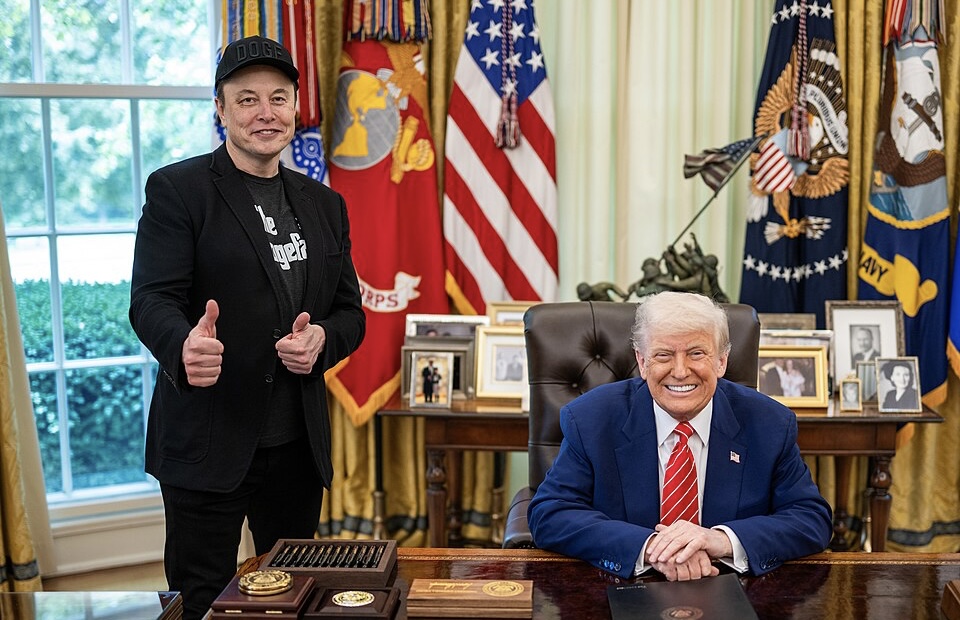
The partnership follows a series of moves by Altman and OpenAI that appear aligned with President Trump. Altman contributed $1 million to the inauguration, attended the event alongside other tech executives, and recently expressed admiration for Trump. He wrote on X that watching Trump “more carefully recently has really changed my perspective on him,” adding that “he will be incredible for the country in many ways.” OpenAI is also involved in the recently announced Stargate project, a multi-billion-dollar initiative to expand U.S. AI infrastructure.