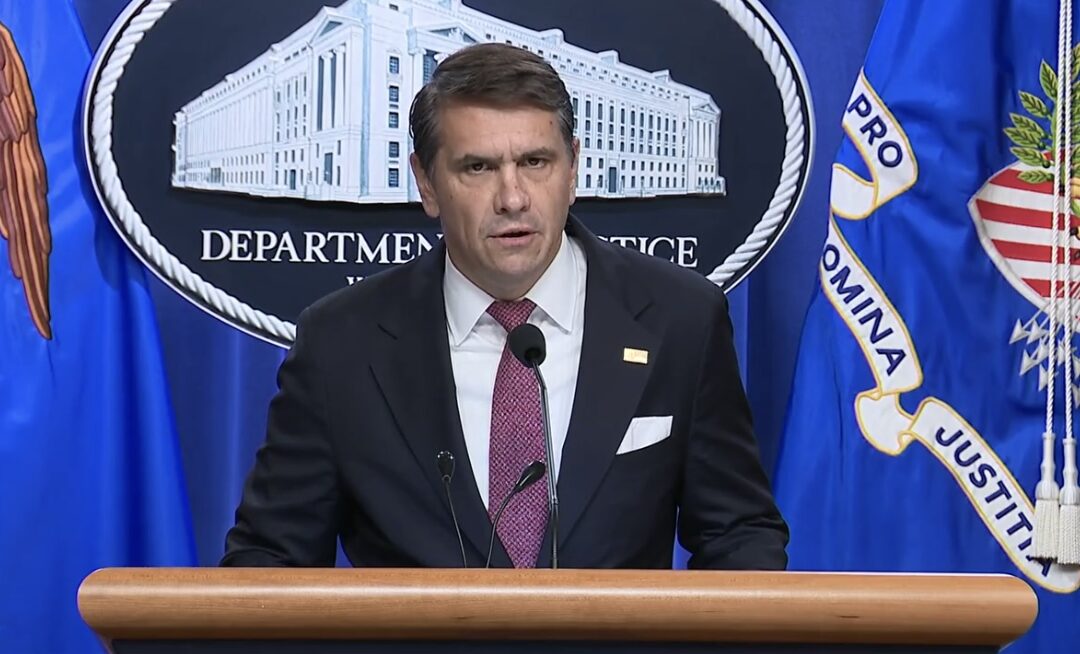

Special Counsel Jack Smith has acknowledged that the evidence in the Mar-a-Lago documents case may have been presented out of its original sequence. His admission of misleading the court on this matter could offer President Trump new grounds to contest the prosecution.
Potentially most worrisome for Judge Cannon is the information outlined in a footnote accompanying this admission. The special counsel states that “the Government acknowledges that this is inconsistent with what Government counsel previously understood and represented to the Court.”
The acknowledgment from prosecutors in a court filing on Friday afternoon followed a request from attorneys representing one of Trump's co-defendants for a postponement in the case. The defense attorneys encountered difficulties in ascertaining the exact origins of specific documents within the 33 boxes seized by the FBI nearly two years ago. Mr. Nauta has requested additional time to prepare his defense, citing inadequate discovery provided by the government.
Mr. Smith refutes those claims as “factually wrong” and “legally baseless,” accusing Mr. Nauta of attempting to create a confusing and misleading narrative regarding the state of discovery. The prosecutor dismisses Mr. Nauta's assertion that he requires information about the specific location of certain documents within storage boxes as “recently manufactured and not credible.” Mr. Nauta faces accusations of conspiracy and obstruction.
In his request for Judge Cannon to reject Mr. Nauta's plea, Mr. Smith makes a surprising admission: “There are some boxes where the order of items within that box is not the same as in the associated scans” taken after the boxes were confiscated from Mar-a-Lago. The special counsel clarifies that “since the boxes were seized and stored, appropriate personnel have had access to the boxes.”
The special counsel maintains that the disparity is not legally significant and asserts that Mr. Nauta has not suffered any disadvantage as a result. However, the potential for evidence tampering is likely to elicit objections, particularly from President Trump.
Smith further explains that classified documents were substituted with cover sheets as temporary placeholders. He notes that the investigative team initially utilized classified cover sheets for this purpose; however, they eventually exhausted their supply due to the abundance of classified documents. The team then began using blank sheets with handwritten notes indicating the classification level of the seized documents. Mr. Smith maintains that the exact location within a box where a classified document was stored at Mar-a-Lago is irrelevant to the ability to construct a defense.
In a hearing last month, Judge Cannon inquired whether the boxes were “in their original, intact form as seized.” In response, his office stated that “[t]hey are, with one exception; and that is that the classified documents have been removed and placeholders have been put in the documents.” It now appears that this statement was not accurate.
The prosecutor refutes the notion that Mr. Nauta must scrutinize the precise location of items within the boxes to build a defense. However, President Trump faces charges not only of obstruction but also 32 counts of the Espionage Act, which hinge on the nature of the documents discovered at Mar-a-Lago.
Judge Cannon will now determine how to address Smith's disclosure. She could opt to grant Nauta's request for a delay or order a more comprehensive review of evidence handling procedures. She is likely to contemplate whether to impose sanctions on the special counsel for misleading the court. She likely feels vindicated by her previous decision, made last year, to appoint a special master to oversee the government's evidence collection process, even though that ruling was subsequently overturned by the United States Court of Appeals for the 11th Circuit.