Judges in Michigan and North Carolina dismissed lawsuits brought by the Republican National Committee (RNC) and others that sought to block ballots cast by voters abroad who have never resided in the states.
President Trump and his allies have touted the lawsuits as critical to safeguarding the 2024 election. The RNC’s lawsuits aimed to stop Michigan and North Carolina from allowing citizens abroad to vote in those states if their parents—or, in Michigan, their spouse—previously lived there, even if the voters themselves had not.
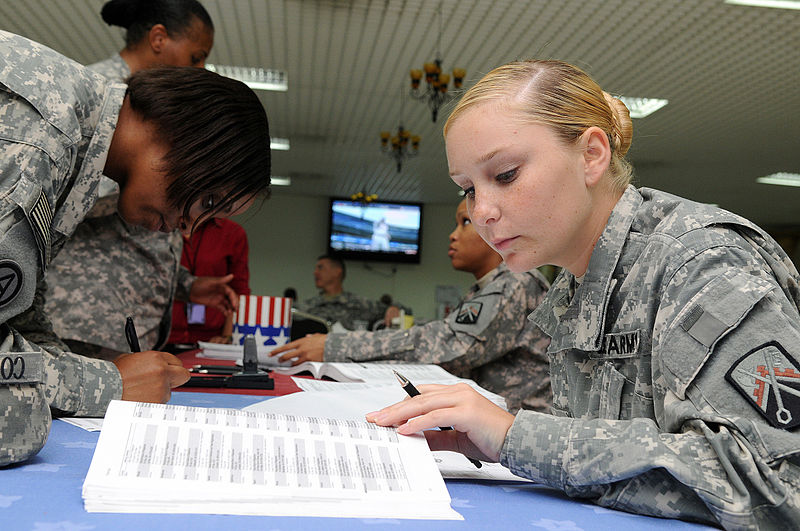
Overseas voting has traditionally been tied to military service but could now be a growing advantage for Democrats due to the expanding number of civilian expatriates.
Michigan Judge Sima Patel called the RNC’s lawsuit a “last-minute attempt to disenfranchise” the spouses and children of former Michigan residents, noting it was filed too late. Meanwhile, Wake County Superior Court Judge John W. Smith in North Carolina rejected the RNC’s emergency request to invalidate certain overseas ballots, pointing out that the policies in question were passed with bipartisan support and that there was “no evidence” of fraudulent voting.
Both states have had these policies in place for several years, but since 2016, civilian overseas voters have begun outnumbering military voters, whose political leanings have shifted. Democrats have invested in mobilizing eligible overseas voters in key battleground states, which Michigan Republicans referenced in their filings.
Judge Patel also dismissed arguments that Michigan’s residency requirements should preclude overseas voters with family ties from participating, noting that the state’s constitution gives the legislature authority to expand voter eligibility.
Michigan officials reported receiving approximately 16,000 requests for overseas ballots, a small fraction of the state’s 8.4 million registered voters.