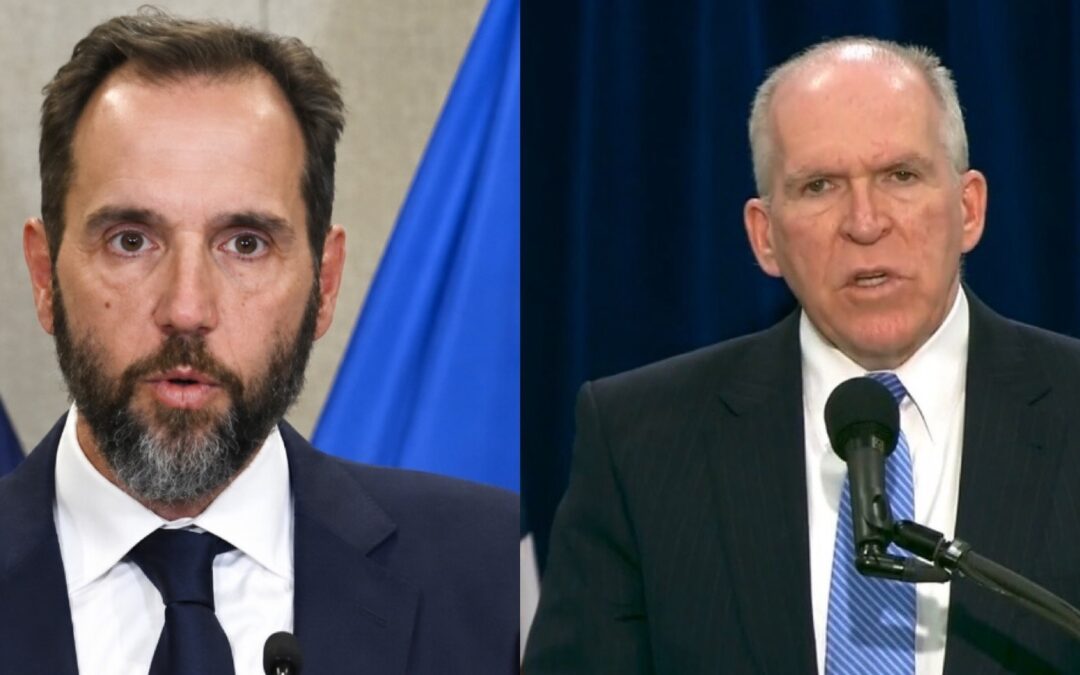

A team of federal prosecutors, led by special counsel Jack Smith, argued in a court filing Wednesday that President Trump is directly responsible for the Jan. 6 riot at the U.S. Capitol. This filing came in response to Trump’s legal team’s effort to dismiss the case against him, asserting that the superseding indictment returned in August clearly links Trump to the events of that day.
Smith’s team contended that Trump “willfully caused others” to obstruct the certification of Biden’s 2020 election “victory.” They stated that Trump’s repeated claims of election fraud and the “false hope” he gave his supporters that then-Vice President Mike Pence could overturn the election were central to his actions. Additionally, the filing accuses Trump of pressuring Pence and legislators to accept fraudulent electoral certificates as part of a broader fake electors scheme.
They emphasized that Trump summoned his supporters to Washington, D.C., and then directed them to march to the Capitol, further linking his rhetoric to the chaos that ensued.
Trump’s legal team previously argued that the indictment stretched legal statutes to hold Trump responsible for events he did not control, contending that Trump took steps to protect against the violence. However, the indictment accuses Trump of exploiting the Capitol attack. Smith’s team also highlighted an instance in which Trump, upon hearing that Pence had been rushed to a secure location after being targeted on Twitter by Trump himself, allegedly responded with indifference, saying, “So what?”
As legal filings continue in the case, Trump maintains his innocence, claiming the indictment is politically motivated. The latest filing from Smith’s team came after the Supreme Court’s decision on presidential immunity, which weakened some aspects of the case.
Smith’s team argued that Trump’s motion to dismiss fails to address any flaws in the indictment and ignores allegations that he and his co-conspirators created fraudulent electoral certificates to obstruct the certification process. Prosecutors have asserted that Trump “resorted to crimes” to stay in office after losing the election, acting as a private candidate rather than as president when he engaged in much of the conduct at issue.
Judge Tanya Chutkan, overseeing the case, has extended filing deadlines, with Trump’s motion to dismiss based on presidential immunity due on Nov. 7 and the government’s reply due on Nov. 21. The future of the case may hinge on the outcome of the upcoming election.